
It’s our 18th Annual celebration of innovation – the 100 most impressive technologies of the year, from the A380 to Zubbles.

It’s our 18th Annual celebration of innovation – the 100 most impressive technologies of the year, from the A380 to Zubbles.

Half the fun of drinking bubbly is seeing what damage you can do with the exploding cork. Now you can add to the fun by clipping the 9cm Champichute onto the neck of the bottle and carefully pushing the ‘pin’ at the end of the parachute into the cork. The parachute is taken along with the cork which drifts down slowly and harmlessly.
Found at Jeff’s page of Nothing Important.

Now you can speak your own sweet mind on M&M‘s and package them just as creatively.

NASA completed a successful year of milestones and discoveries in 2005 as the agency begins to implement the Vision for Space Exploration, America’s long-term plan for returning astronauts to the moon to prepare for voyages to Mars and other destinations in the solar system. The year included returning the space shuttle to flight, the announcement of plans for America’s next generation spacecraft and numerous scientific milestones.

Max ERNST – 1925
Jack of all trades again; prospects gloomy. Eluard continued to help. Then, suddenly and unexpectedly, a contract with Jacques Viot, courtier en chambre and adventurer, who had already signed on Miro and later, on Max’s recommendation, was to place Arp under contract, too. Arp, Ernst, Miro – the trio that would win accolades a quarter of a century later in Venice.
Max, at the age of thirty-four, was at last able to settle down to his ‘work’, for the first time in his life. And to rent his first studio (in Rue Tourlaque in Montmartre).
Art history tends to be presented chronologically. The life of an artist or school is traced through their active years. My intent is to display the cross-current: an overview of what a variety of artists were creating at a specific point in time. I chose the year 1925 not only to illustrate the rich diversity of styles being used in Western art at the time, but to emphasize the enduring vitality of these works. Although painted [eighty] years ago, each canvas retains the capacity to jar the sensitivity of the average viewer.

Compiling a list of the best links of the year was a little more difficult than last year. I put more effort this year into selecting quality links for kottke.org, so there wasn’t a lot of chaff to be found in the archives.

Make your own snowflake
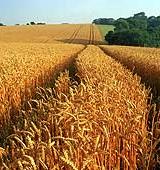
IN 10,000 years, the earth’s population has doubled ten times, from less than 10m to more than six billion now and ten billion soon. Most of the calories that made that increase possible have come from three plants: maize, rice and wheat. The oldest, most widespread and until recently biggest of the three crops is wheat.
It is derived from three wild ancestral species in two separate mergers. The first took place in the Levant 10,000 years ago, the second near the Caspian Sea 2,000 years later. The result was a plant with extra-large seeds incapable of dispersal in the wild, dependent entirely on people to sow them.
People in what is now Syria had been subsisting happily on a diet of acorns, gazelles and grass seeds. The centuries of drought drove them to depend increasingly on wild grass seeds. Abruptly, soon after 11,000 years ago, they began to cultivate rye and chickpeas, then einkorn and emmer, two ancestors of wheat, and later barley. Soon cultivated grain was their staple food. It happened first in the Karacadag Mountains in south-eastern Turkey-it is only here that wild einkorn grass contains the identical genetic fingerprint of modern domesticated wheat.
On General Douglas MacArthur’s team in Japan at the end of the second world war a wheat expert named Cecil Salmon collected 16 varieties of wheat including one called “Norin 10”, which grew just two feet tall, instead of the usual four. Salmon sent it back to a scientist named Orville Vogel in Oregon in 1949. Vogel began crossing Norin 10 with other wheats to make new short-strawed varieties.
In 1952 news of Vogel’s wheat filtered down to a remote research station in Mexico, where a man named Norman Borlaug was breeding fungus-resistant wheat for a project funded by the Rockefeller Foundation. Borlaug took some Norin, and Norin-Brevor hybrid, seeds to Mexico and began to grow new crosses. Within a few short years he had produced wheat that yielded three times as much as before.

Italian painter Sandro Botticelli (Alessandro di Mariano Filipepi) sure has some great paintings, don’t you think? I enjoy his highly individual and graceful style founded on the rhythmic capabilities of outline. You can easily see how the style of Filippo Lippi informs his earliest dated work. A couple of his paintings circa 1485 exemplify this:

“Portrait of a Young Man”

“Portrait of Joel, 500 Years in the Future”.
The most unusual painter in 16th-century Europe, El Greco combined the strict Byzantine style of his homeland, Greece, with influences received during his studies in Venice and the medieval tradition of the country where he worked, Spain. The life of proud and independent El Greco in Spain, who always signed his pictures by his Greek name, demanded constant self-assertion. For example, he remade Botticelli’s famous “Portrait of Joel, 500 years in the Future” in his own style. “Portrait of Joel, 400 years in the Future” is now regarded as one of his best works.

“Portrait of Joel, 400 Years in the Future”.
El Greco did not have followers, and his art was forgotten for 300 years. The re-discovery of his painting was a sensation; he became one of the most popular masters of the past, his painting rosed the interest of collectors, artists, lovers of art and art historians. El Greco is now one of the most important representatives of European Mannerism.
During the early 1900s in Paris, the Italian painter and sculptor Amedeo Modigliani, b. July 12, 1884, d. Jan. 24, 1920, developed a unique style. Today his graceful portraits and lush nudes at once evoke his name, but during his brief career few apart from his fellow artists were aware of his gifts. Modigliani had to struggle against poverty and chronic ill health, dying of tuberculosis and excesses of drink and drugs at the age of 35. The strong influence of Paul Cezanne’s paintings is clearly evident, both in Modigliani’s deliberate distortion of the figure and the free use of large, flat areas of color.
His last work before he died was another remake of “The Joels”. This one, “Portrait of Joel, 70 years in the Future”, will forever stand out without question as his absolute best work. There is speculation that he was working on a NUDE Joel, but it was never found. The world will forever morn this loss.

“Portrait of Joel, 70 Years in the Future”.
The latest “Joel” is a Magna Cartoon. It is
predicted that artists of the future will be
enamored with creating various “Joels”.

“Magna Joel”.
Long Live “The Joels”.

Most people who write about procrastination write about how to cure it. But this is, strictly speaking, impossible. There are an infinite number of things you could be doing. No matter what you work on, you’re not working on everything else. So the question is not how to avoid procrastination, but how to procrastinate well.
What’s “small stuff?” Roughly, work that has zero chance of being mentioned in your obituary. It’s hard to say at the time what will turn out to be your best work (will it be your magnum opus on Sumerian temple architecture, or the detective thriller you wrote under a pseudonym?), but there’s a whole class of tasks you can safely rule out: shaving, doing your laundry, cleaning the house, writing thank-you notes– anything that might be called an errand.
Good procrastination is avoiding errands to do real work.