Large and Dangerous Rocket Ships

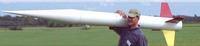
LDRS

I like any event that has “Dangerous” right in the middle of it’s name.

Adventures from the Technology Underground is Gurstelle’s lively and weirdly compelling report of his travels. In these pages we meet Frank Kosdon and others who draw the scrutiny of the FAA, ATF, and other federal agencies in their pursuit of high-power amateur rocketry, which they demonstrate to impressive-and sometimes explosive-effect at the annual LDRS gathering held in various remote and unpopulated areas

Northern Ohio’s history in rocketry dates back to 1932, when the Cleveland Rocketry Society began work in experimental rocketry with liquid fueled rocket engines.

In 1966 the Natural Science Museum Model Rocket Research Society or NSMMRRS was formed and run by a former curator of the museum.

In 1970, The North Royalton Rocket Society or NRRS was formed and operated through 1974.

At this time the Suburban Northeast Ohio Association of Rocketry Club (SNOAR) was formed. This group started holding the Great Lakes Regional Meets (GLRM) that are now known as the annual LDRS launches (Tripoli’s annual National High Power Rocketry Launches).

The first GLRM’s were held at the Garfield Heights landfill in the mid to late 70’s and started as the NAR Sport Launches.

In 1982, the GLRM’s became the Large and Dangerous Rocket Ships launches (LDRS).

The first 5 LDRS launches were held here in Northern Ohio (Medina, Ohio) with the last one being held here in August 1986.

LDRS is number three on Wired Magazines list of the 10 Best North American Geek Fests.

11th annual Large Dangerous Rocket Ship convention
14th annual Large Dangerous Rocket Ship convention Pics
17th annual Large Dangerous Rocket Ship convention
20th annual Large Dangerous Rocket Ship convention Pics
21st annual Large Dangerous Rocket Ship convention
23rd annual Large Dangerous Rocket Ship convention Pics
24th annual Large Dangerous Rocket Ship convention SlideShow
25th annual Large Dangerous Rocket Ship convention Video

Links

Algorithm

JavaAntz

To write a computer program, you have to tell the computer, step by step, exactly what you want it to do. The computer then “executes” the program, following each step mechanically, to accomplish the end goal.

When you are telling the computer what to do, you also get to choose how it’s going to do it. That’s where computer algorithms come in. The algorithm is the basic technique used to get the job done.

JavaAntz:

Why did I make this?
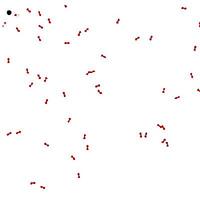
It’s because I’m fascinated with “Boid” algorithms which seek to simulate life’s complex patterns with simple algorithms and rules.

The Ant Rules
(1) If you don’t know where breadcrumbs are, try to find some.
(2) If you see another ant, ask if they know where bread crumbs are. If they know, head toward them. If not, run away from that ant (because afterall, food probably isn’t nearthem if they don’t know where food is.)
(3) If you find bread crumbs, takeit back to the hole, and return to the place where you found food (because where there is food, there is probably more food.) If you don’t find any crumbs where you thought they were supposed to be, start searching again (and tell other ants there is no food there).

Dynalifter

Dynalifter

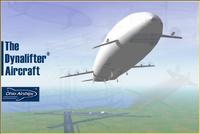
Dynalifters avoid the operational drawbacks of a traditional airship associated with takeoff, landing, and ground operations. The conventional airship is difficult to handle on the ground. It requires a large number of people to grab lines during landing, or it must use equipment of some sort to “catch” the airship and attach it to a mooring mast.

The Dynalifter avoids many of these problems [with airships] because it isn’t “lighter-than-air”.

del.icio.us – Aerospace
digg – Aerospace
technorati – Aerospace

Iowa Cows

One Million Cows

One of Iowa’s hidden treasures is its beef industry. At any one time, this state is home to over a million beef cows and in excess of a million cattle on feed. Iowa has nearly 34,000 farms with cattle on them, including over 10,000 feedlots (the most in the nation) and 23,000 beef cow herds.

According to the 2002 census, producers received more than $1.47 billion in cash receipts from the state’s cattle, and cattle sales represent 20 percent of Iowa’s annual agricultural income. That compares with 23 percent for hog sales and 28 percent for corn.

Cattle are found all around the state, but different types of cattle are raised in different parts of the state. There are dairy operations in northeast Iowa, cow-calf operations in southern Iowa, as well as cattle feeding in northwest and eastern Iowa. Approximately 35-36,000 Iowa farms have at least a few cattle. In 2005, Iowa ranked 8th in cattle production with approximately 3.60 million.

Cows are helping the industry fuel Iowa’s future.

The impacts of a growing ethanol industry are yet to be seen.

Cattle Congress

Celebrating Things Bovine

Hay

It’s what’s for dinner

Links

Little Cows

Milk

My Cheeseburger (Good PowerPoint)

Naturally Iowa

Quiz