Chernobyl Legacy

Chernobyl

On April 26th, 1986, Chernobyl’s Reactor No. 4 unleashed a thoroughly modern plague that emptied cities, condemned entire regions, and seeped invisibly into the bodies of those exposed to it’s destructive presence.

An interdisciplinary MIT faculty group decided to study the future of nuclear power because of a belief that this technology is an important option for the United States and the world to meet future energy needs without emitting carbon dioxide and other atmospheric pollutants.

The authors of the study emphasized that nuclear power is not the only non-carbon option and stated that they believe it should be pursued as a long term option along with other options such as the use of renewable energy sources, increased efficiency, and carbon sequestration..

A group of physicists claims to have discovered a technique that could make nuclear waste much easier to deal with. The new technique, reported in the August edition of Physics World, would render nuclear waste harmless on timescales of just a few tens of years, instead of thousands.


Naked Conversations

Naked Conversations

To the denizens of the blogosphere of you who left intelligent, constructive and useful comments:

I’m mentioned in the book Naked Conversations: How Blogs are Changing the Way Businesses Talk with Customers. It’s on Page 235.

Now I know how Navin Johnson felt on that fateful day:

The new phone book’s here! The new phone book’s here!
I’m somebody now! Millions of people look at this book every day! This is the kind of spontaneous publicity, you’re name in print, that makes people. I’m in print! Things are going to start happening to me now!

More

Jacson Pollock

Jacson Pollock

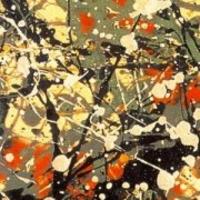
There is something about an artist that is undeniably intriguing. The public expects their daily lives to be somehow different, filled with the dreamy eccentricities of Dali or the tormented thoughts of Munch. We want their life stories to play out in dramatic form so we see the bridge between the creator and the creation. Because this summer’s Guggenheim exhibit focuses on one of the Greatest American Painters of the 20th Century, The New Yorker has taken a look into the life of Jacson Pollock. He is the lead of his own bildungsroman.

Alaska is Big

Alaska US

Q1. What’s the farthest state north?
Q2. What’s the farthest state west?
Q3. What’s the farthest state east?

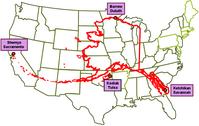
If Alaska were superimposed over a map of the lower 48 (as you can see in the image [above]), its western tip would sit in Sacramento, CA, its northern tip in Duluth, MN, and its eastern tip in Savannah, GA.

A1. Alaska
A2. Alaska
A3. Alaska – It goes past 180 degrees west.

Parking Spots

Parking Spots

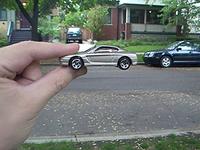
Want to have fun today? Right now? Submit a photo to Dubi Kaufmann’s Parking Spots. Make sure you follow the rules:

1. Shoot a toy car next to a real one.
2. Make the toy car look like a real car by having it seem to be the same size.
3. look at the pictures in the gallery to get the idea.
4. Take the picture.
5. Have your method of holdnig the small car in place be visible. In other words let the people see your hand,tripod or a rail.
6. Make your image a 300 by 225 JPG.

Making your digital picture the correct size is easy.

Now, if I ever have to choose between a Bugatti EB110, a Mercedes SLK 230, and a BMW Z3, I’ll know which one looks best in my driveway.

Microwave Radiometer

Microwave Radiometer

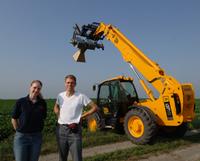
For decades, Iowa State University researchers have studied the cycling of water among soil, vegetation and the atmosphere that is vital to production agriculture. Now a team of Iowa State and University of Iowa researchers is beginning a new project to perfect the use of remote sensing technology to monitor the water cycle.
~
Eventually microwave remote sensing instruments on satellites will take pictures of the earth’s surface and produce maps of soil moisture.
~
The ultimate goal would be to someday use this type of information in conjunction with models to forecast soil moisture conditions, the weather and to detect climate change.