
Petrie wants to create software to enable computers to negotiate with each other over the Internet to achieve goals that now require human time and toil.

Petrie wants to create software to enable computers to negotiate with each other over the Internet to achieve goals that now require human time and toil.

Problem: Typewriter – Take this now useless item and give it a new life then it was intended to have.
Solution: The “Corona-Matic” a typewriter turned into a waffle iron that makes keyboard-shaped waffles.
via TreeHugger

Colony Collapse Disorder (CCD) is the name that has been given to the latest, and what seems to be the most serious, die-off of honey bee colonies across the country.
What potential causes of CCD is the Working Group investigating? The current research priorities ~ include, but is not limited to:
– Chemical residue/contamination in the wax, food stores and bees
– Known and unknown pathogens in the bees and brood
– Parasite load in the bees and brood
– Nutritional fitness of the adult bees
– Level of stress in adult bees as indicated by stress induced proteins
– Lack of genetic diversity and lineage of beesWhat are examples of topics that the CCD working group is not currently investigating?
– GMO crops: ~ CCD symptoms do not fit what would be expected in Bt affected organisms.
– Radiation transmitted by cell towers: The distribution of both affected and non-affected CCD apiaries does not make this a likely cause.
In 1999, 29 million acres of Bt corn, potato and cotton were grown globally.
While this possibility has not been ruled out, the weight of evidence reported here argues strongly that the current use of Bt crops is not associated with CCD.
In an interview, Cox-Foster said it’s possible that a new bee disease may have come to the United States last year when the law banning bees from other countries was changed to allow imports from Australia to service California’s almond crop.
~
She was asked if the disorder had affected so-called “killer bees,” the aggressive Africanized hybrids that have appeared in Florida, Texas and other Southern and Southwestern states.“We are not seeing the collapse among Africanized bees in Arizona,” she said, adding that the insects also appear resistant to a costly mite that has plagued hives since 1988.
“They are also great pollinators,” she said. “It may be that we will find genes in the Africanized hybrids that will be valuable in dealing with this problem.”
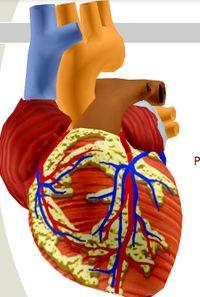
The main function of the heart is to deliver oxygen-rich blood to every cell in the body.

Welcome to “Brains!“, Slate’s special issue on mind science and the state of neuro-culture.

The next 11-year cycle of solar storms will most likely start next March and peak in late 2011 or mid-2012 – up to a year later than expected – according to a forecast issued today by NOAA’s Space Environment Center in coordination with an international panel of solar experts.
“By giving a long-term outlook, we’re advancing a new field-space climate-that’s still in its infancy,” said retired Air Force Brig. Gen. David L. Johnson, director of NOAA’s National Weather Service. “Issuing a cycle prediction of the onset this far in advance lies on the very edge of what we know about the Sun.”

Panelists discuss how the Segway personal transporter has revolutionized American life.
I think one might have crashed in Haiti.

Parkour is the art of moving through your environment using only your body and the surroundings to propel yourself. ~ The goal is to overcome obstacles quickly and efficiently, without using extraneous movement. ~ If the intention is to get somewhere using the most effective movements with the least loss of momentum, then it could probably be considered Parkour.
Parkour is not acrobatics, tricking, stunts, recklessness, or jumping off high objects for no reason.
Free Running has grown to be descriptive of a sort of “cousin” activity to Parkour – Free Running is more expressive and creative in nature, with moves such as acrobatics, flips, and spins added for flair, creativity, or just because someone wants to.
Parkour was created in Lisses, a medium prosperous suburb of Paris, in the early nineteen-nineties, by a reserved and restless teen-age boy named David Belle. His father, Raymond, who died in 1999, was an acrobat and a hero fireman.

Things people actually said in court, word for word.

It’s easy! Choose a theme, personalize your board and in moments your very own unique “My Monopoly” board is created.
