Archive for 'Uncategorized'

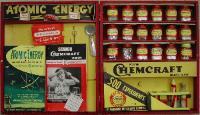
Endangered Chemistry Set

Chemcraft

What do Islamofacism, methamphetamine production, tort lawyers, and homemade fireworks have in common?
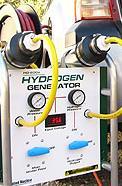

Hydrogen GeneratorNerd

More Sizzling Chemistry

Northern Loop Adventure

Leading up to the 4th of July Holiday, we headed out on another Iowa (ok, near Iowa) adventure.

Our first stop was the Iowa Aviation Museum in Greenfield, IA. Roberta Nichols was very friendly and really knew a lot about the aircraft on display and the Iowa Aviation Hall of Fame. I didn’t see James Herman Banning on the list, so I nominated him.

On the way out of town, we stopped at The Rock for some pictures.

We headed west on Interstate 80, then north on Interstate 29, and took a little diversion on the Loess Hills Scenic Byway. Back on I29, we saw the Sergeant Floyd Monument from the Interstate, but didn’t stop.

We did stop at the Corn Palace. From there, it was a longer drive to the BadLands Loop which ends at Wall Drug. We didn’t need ice water, so we didn’t go in.

Next, we visited a drive-thru-zoo and found out that seeing it in person really makes Mount Rushmore come alive. We didn’t stay for the fireworks because we wanted to visit the Wisconsin Dells on our way back home so we could ride the Ducks.

Anxious to get home, we saw but didn’t visit, the House on the Rock.

It was as much fun as our last adventure.
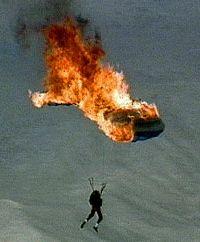
Parachute Accidents

Parachute Accidents

All kinds of bad things can happen, if you’re not lucky.

Skydiving seemed like a good idea at the time.

Skydiver Video

It shows him plummeting 12,000ft to earth after both his parachutes failed.
Free Fall
Triumph of Victory

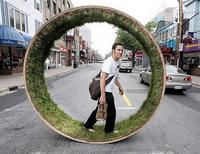
Grass Wheel

Grass Wheel

Many of us are so busy being good little hamsters that we never have face time with green space. A group of students from Dalhousie School of Architecture - David Gallaugher, Kevin James, and Jacob Jebailey - decided to remedy this problem with a street-ready grass-lined wheel.

This project reminds us of Rebar’s PARK(ing), which turned metered parking spaces into temporary parks. Both concepts point out not only on our lack of interesting green space, but also our lack of time to enjoy them. We’re huge fans of urban intervention as a means of shaking up normalcy and calling for a change.
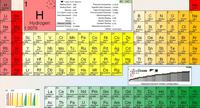
Flash Periodic Chart

Flash Periodic Chart

This application was developed by Adams Brian D of Touchspin Design as an aid to his own understanding and that of his students.
More

Eastern Iowa Adventure

Fenelon Place Elevator

Is this Heaven? No, it’s Iowa.

Friday evening we drove to the Mississippi River and stayed overnight in Clinton.

We spent all day Saturday visiting eastern Iowa attractions.

We started out at the Cable Car in Dubuque.

Then we were off to the Field of Dreams Movie Site in Dyersville. They built it, we came to see it (eighteen years later).

Next, we headed south to the National Motorcycle Museum in Anamosa and saw a lot of interesting Old Motorcycles.

Still heading south, we got to the Herbert Hoover National Historic Site with about two hours remaining before it closed for the day.

Solar System

Moons

The Solar System is made up of the Sun, the planets, and their moons.
Don’t forget about Meteors, Asteroids, and other Near Earth Objects.

The Sun contains more than 99.8% of the total mass of the Solar System (Jupiter contains most of the rest).

The several-days-long flight of the various Apollo missions [to the moon] in the ’60s and ’70’s would not even get them to two-thirds of the Sun’s radius,

All nine planets can be seen with a small telescope; all but Pluto can be seen with binoculars.

Planetary Fact Sheet

The Earth - as seen from the Mars Rover.

Jigsaw Puzzle
Build a Solar System

Your House

Impact

First we had to worry about Near Earth Objects hitting the planet.

Then we learned about Megacryometeors falling from the clear blue sky.

Not to mention Strangelets that can travel through the Earth and hit you.

Let’s just hope nothing lands here!

History of Wheat

Wheat

IN 10,000 years, the earth’s population has doubled ten times, from less than 10m to more than six billion now and ten billion soon. Most of the calories that made that increase possible have come from three plants: maize, rice and wheat. The oldest, most widespread and until recently biggest of the three crops is wheat.

It is derived from three wild ancestral species in two separate mergers. The first took place in the Levant 10,000 years ago, the second near the Caspian Sea 2,000 years later. The result was a plant with extra-large seeds incapable of dispersal in the wild, dependent entirely on people to sow them.

People in what is now Syria had been subsisting happily on a diet of acorns, gazelles and grass seeds. The centuries of drought drove them to depend increasingly on wild grass seeds. Abruptly, soon after 11,000 years ago, they began to cultivate rye and chickpeas, then einkorn and emmer, two ancestors of wheat, and later barley. Soon cultivated grain was their staple food. It happened first in the Karacadag Mountains in south-eastern Turkey-it is only here that wild einkorn grass contains the identical genetic fingerprint of modern domesticated wheat.

On General Douglas MacArthur’s team in Japan at the end of the second world war a wheat expert named Cecil Salmon collected 16 varieties of wheat including one called “Norin 10″, which grew just two feet tall, instead of the usual four. Salmon sent it back to a scientist named Orville Vogel in Oregon in 1949. Vogel began crossing Norin 10 with other wheats to make new short-strawed varieties.

In 1952 news of Vogel’s wheat filtered down to a remote research station in Mexico, where a man named Norman Borlaug was breeding fungus-resistant wheat for a project funded by the Rockefeller Foundation. Borlaug took some Norin, and Norin-Brevor hybrid, seeds to Mexico and began to grow new crosses. Within a few short years he had produced wheat that yielded three times as much as before.

Next posts » Back to top